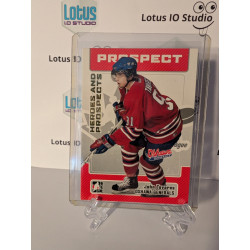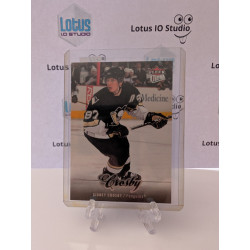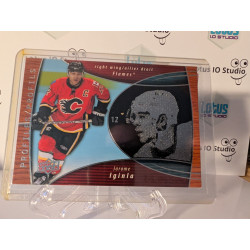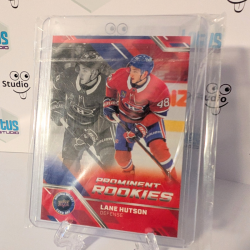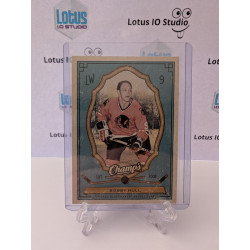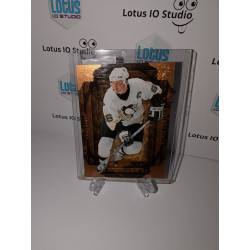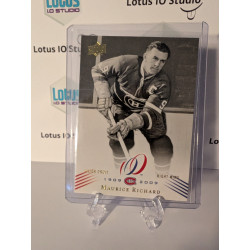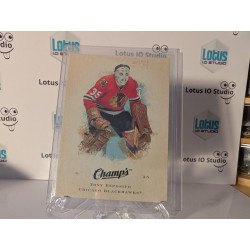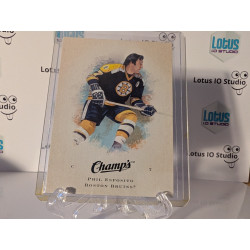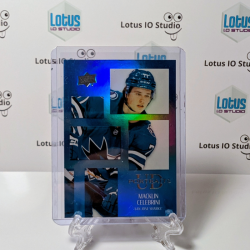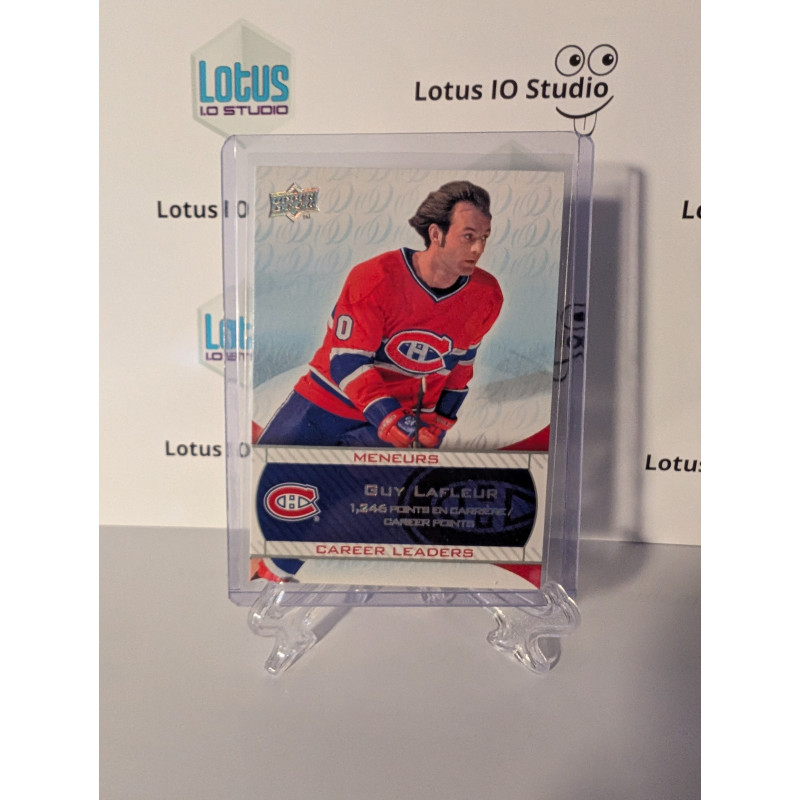

This is an original Upper Deck trading card. Sold as is, with no refunds. Make up your own mind and get this amazing card now.
 Security policy
(edit with the Customer Reassurance module)
 Delivery policy
(edit with the Customer Reassurance module)
 Return policy
(edit with the Customer Reassurance module)
This is an original Upper Deck trading card. Sold as is, with no refunds. Make up your own mind and get this amazing card now.
*
Guy Lafleur's hockey journey was characterized by a meteoric rise in junior hockey, followed by a pressure-filled transition into the NHL as the designated successor to a legend.
Born in Thurso, Quebec, Lafleur quickly gained fame, notably during the Quebec International Pee-Wee Hockey Tournament. His reputation exploded in the Quebec Major Junior Hockey League (QMJHL).
The Quebec Remparts: He joined the Quebec Aces, who later became the Quebec Remparts. He famously wore number 4 in honor of his idol, Jean Béliveau.
Stunning Statistics: In just two seasons with the Remparts (1969–1971), Lafleur was utterly dominant, drawing massive crowds everywhere he played:
1969–1970 Season: 103 goals and 170 points in 56 games.
1970–1971 Season: 130 goals and 209 points in 62 games.
The Memorial Cup: He capped his junior career by leading the Remparts to the Memorial Cup in 1971, affirming his status as the country's top young prospect.
His success made him the most coveted player in the world.
The 1971 Draft: Thanks to a clever trade by GM Sam Pollock, the Montreal Canadiens secured the first overall pick and selected Guy Lafleur at number one.
The Heir Apparent: Lafleur's arrival coincided with the retirement of Jean Béliveau. The pressure was immense; he was immediately viewed as the successor to Canadiens legends. He later adopted the iconic number 10.
Unlike his junior years, Lafleur's start in the professional league was challenging.
Modest Production: His first three seasons (1971 to 1974) were considered underwhelming by fans expecting immediate brilliance. He averaged about 26 goals per season, far below the sky-high expectations.
Struggles and Scrutiny: The pressure led to frustration, and he was sometimes booed at the Forum. He played wearing a protective helmet, often with his ice time tightly controlled by coach Scotty Bowman.
The Turning Point (1974): Everything changed at the 1974 training camp. Lafleur took off his helmet (and never wore one again in his NHL career). This act symbolized his liberation and the start of the "Flower Power" era, transforming him into the spectacular, free-spirited player who would anchor the Canadiens' dynasty of the late 1970s.

Data sheet
You might also like
This is an original Upper Deck trading card. Sold as is, with no refunds. Make up your own mind and get this amazing card now.